Tieback and Anchor Repair in Cape Coral, FL — What to Expect
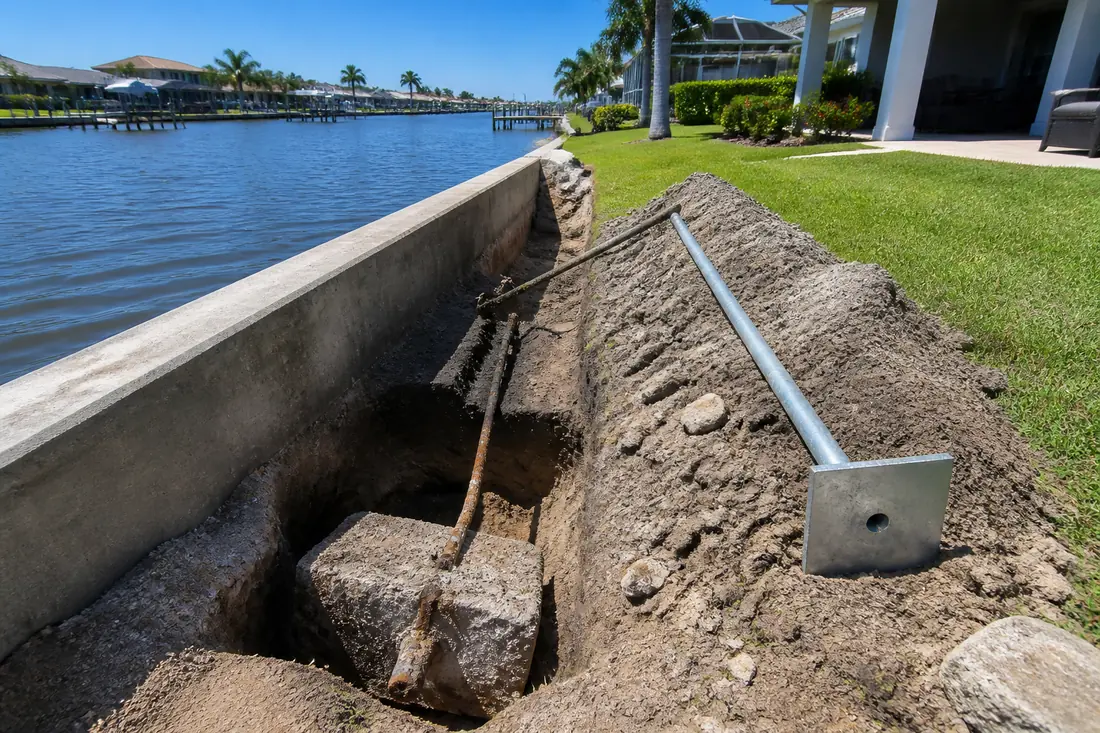
A seawall is not held up by the panels alone. Anchors run back from the wall into the soil behind it and hold the top against the pressure of the retained ground. When those anchors corrode, stretch or lose their grip, the wall starts to rotate at the top — which is what a leaning wall usually is, rather than a foundation problem.
Anchor restoration is generally the difference between a wall that can be saved and one that has to be replaced. Because the work happens behind the wall rather than on the water face, it is also often less disruptive than owners expect, though it does mean working across the ground immediately behind the wall.
What Is Included
- Wall alignment measured rather than eyeballed
- Existing anchor condition established before a method is chosen
- New anchors installed to sound ground behind the failure zone
- Wall drawn back where alignment can safely be recovered
- Corrosion-resistant fixings specified for saltwater exposure
The Tieback and Anchor Repair Process
- 1
Step 1: Measure the Lean
How far out of plumb the wall is, and whether that varies along its length, distinguishes anchor failure from footing movement. The two need different work and look similar from a distance.
- 2
Step 2: Establish the Condition of the Existing Anchors
Whether the original anchors have corroded through, pulled, or were never adequate for the load changes what replacing them involves and where the new ones have to reach.
- 3
Step 3: Install New Anchors Beyond the Failure Zone
New anchors are taken back to ground capable of holding the load, which is further back than the disturbed soil immediately behind a failing wall. Anchoring into that disturbed zone repeats the failure.
- 4
Step 4: Recover Alignment Where It Is Safe To
Some walls can be drawn part of the way back toward plumb; others are held where they are because moving them would crack sound panels. Which applies is a judgment made on the wall, not a default.
Types of Tieback and Anchor Repair in Cape Coral
Helical Tieback Anchors
Screwed into the soil behind the wall to a depth that develops the required capacity, with the installation torque giving a direct read on the ground they are gripping.
Deadman Anchor Restoration
Rebuilding or replacing the buried anchor blocks used in older walls, along with the rods connecting them, which are commonly the corroded element rather than the block itself.
Anchor Rod Replacement
Where blocks remain sound but the rods between them and the wall have corroded, replacing the rods with material specified for saltwater rather than for a freshwater exposure.
Wall Straightening
Drawing a leaning wall back toward vertical where the panels and cap can take it, carried out gradually so the structure is not cracked in the process of correcting it.
What Matters When Choosing a Seawalls Contractor in Cape Coral, FL
The cause gets found before the wall gets patched
Cracking and settlement behind a seawall are usually symptoms of soil moving through it, not of the concrete itself failing. Where the water is getting through decides what the repair actually is.
Repair and replacement priced as separate answers
A wall with sound panels and a failed cap is a different job from a wall that has lost its footing. Both get assessed, and which one this is gets said plainly rather than defaulting to the larger scope.
Built for saltwater and tide loading
Canal walls sit in brackish water with a tide cycle behind them. Materials and fixings are specified for that exposure, because galvanized steel corrodes faster in salt spray and tidal conditions than in fresh water.
Permitting handled as part of the work
Inside Cape Coral city limits the City issues the marine improvement permit for seawall work. On saltwater canals that is not the whole picture — state approval through FDEP or a US Army Corps authorization under SAJ-91 can apply as well, which the City guideline requires except on fresh water. Which approvals apply is established before a scope is priced rather than discovered mid-job.
Tieback and Anchor Repair FAQs
My seawall is leaning. Does that mean it has to be replaced?
Not necessarily. Leaning most often means the anchors holding the top of the wall back have failed, and a wall whose panels and footing are still sound can frequently be re-anchored and, in some cases, drawn partway back toward plumb. Replacement becomes the answer where the panels have cracked, the cap has broken up, or the base of the wall has been undermined. Measuring the lean and checking the base is what separates those cases.
How disruptive is tieback work to a yard or pool deck?
It varies with how much room there is behind the wall and what sits on it. Anchors have to reach ground beyond the disturbed zone, so the work happens on the land side, and pavers, turf or planting in that strip are affected. Where a pool cage or deck sits close to the wall, access is planned around it, and what has to be lifted and reinstated is agreed before work starts rather than discovered during it.
Other Services in Cape Coral
- Riprap and Rock RevetmentRock placed at the toe of a wall or along a shoreline to absorb wave energy and stop undermining.
- Shoreline Erosion ControlStabilizing a shoreline that is losing ground, using the approach the site and the permitting actually allow.
- Storm Damage Seawall RepairAssessment and repair after surge, high water or debris impact, including documentation for a claim.